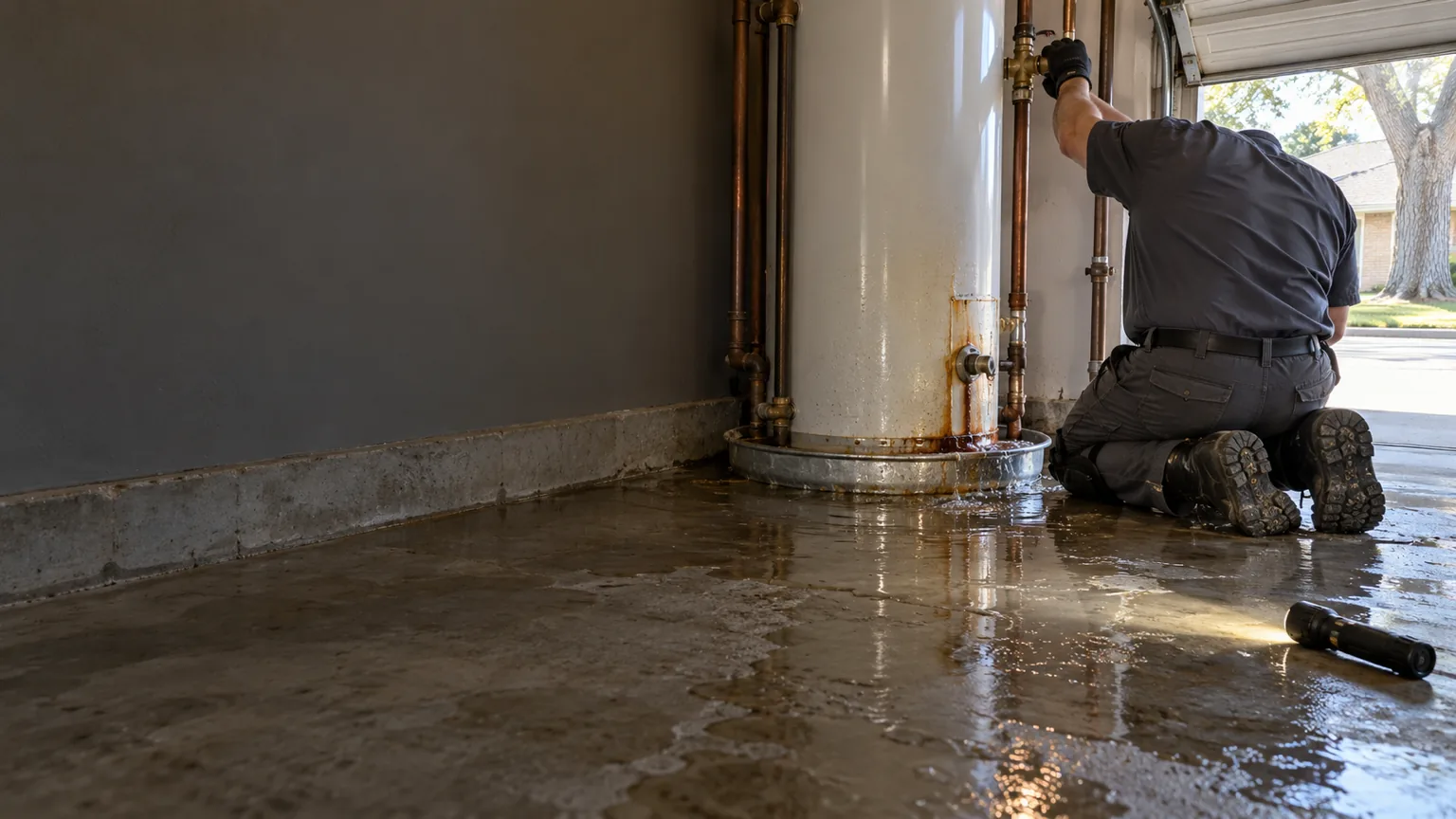
Plumber kneeling by a leaking water heater in a Texas garage, water in the drain pan, hand on the cold shut-off valve

Emergency Water Heater Leak Repair in Texas

Water heater leak repair in homes and rentals across Texas, from Houston, TX to El Paso, TX. We find whether the water is coming from the relief valve, drain valve, a fitting or the tank, fix it, and replace the heater when the tank has failed. Calls answered 24/7.

  • Service areaHomes and rentals across Texas
  • Heaters we work onTank and tankless, gas and electric
  • Our one jobLeaking water heaters
  • CallsAnswered 24/7

Common Causes of Water Heater Leaks in Texas Homes

We do water heater leak repair across Texas on tank and tankless heaters. The job starts with finding the source: the relief valve, the drain valve, a fitting on top or the tank itself. Valves and fittings are usually a part swap; a tank that leaks through its shell has to be replaced, and that decides the cost.

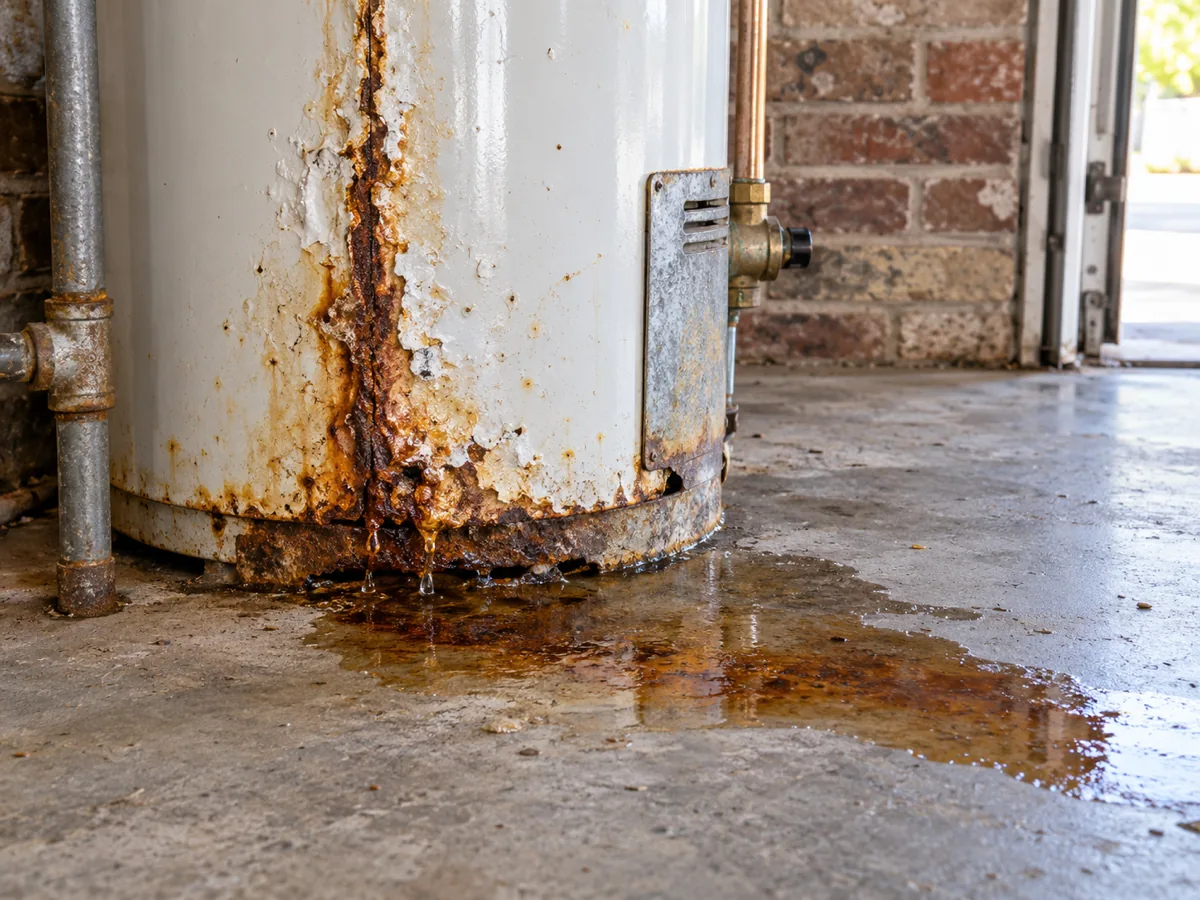
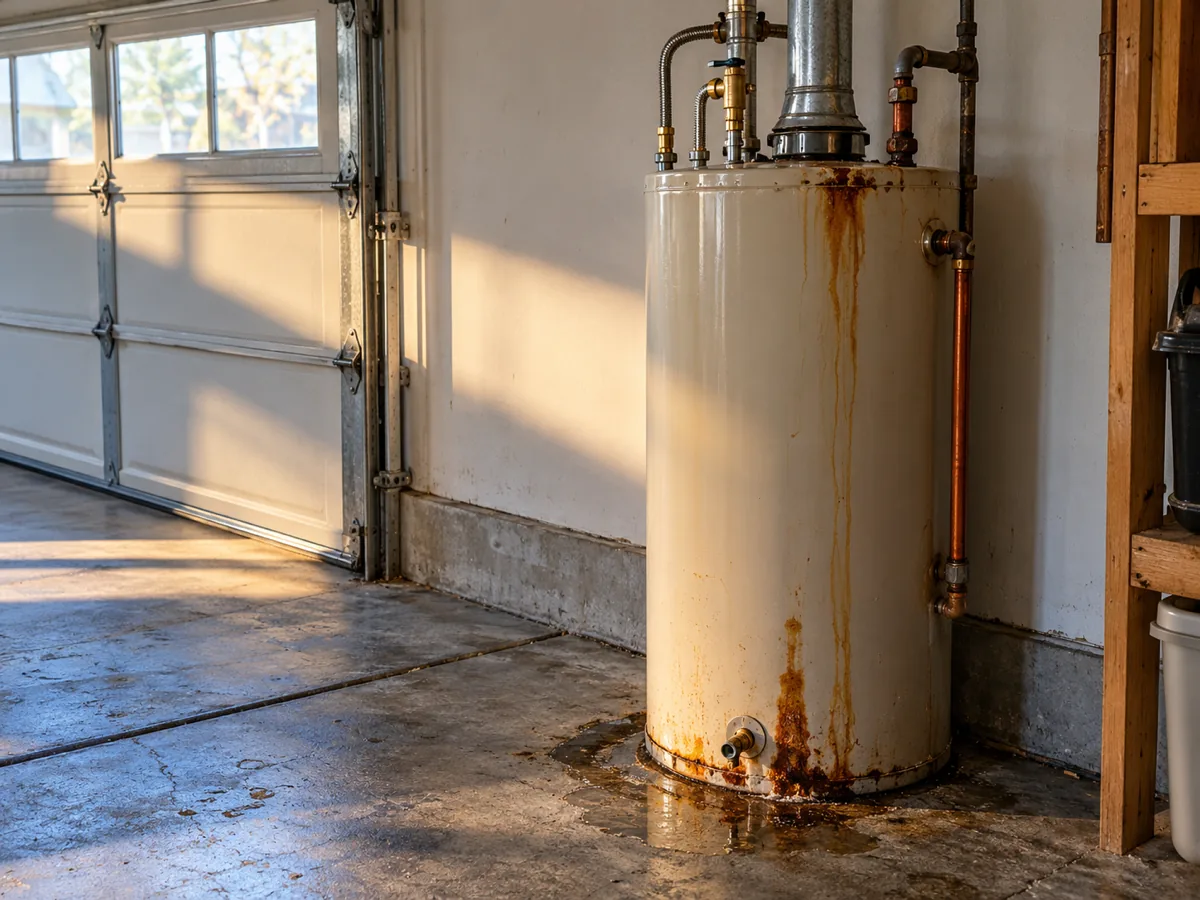
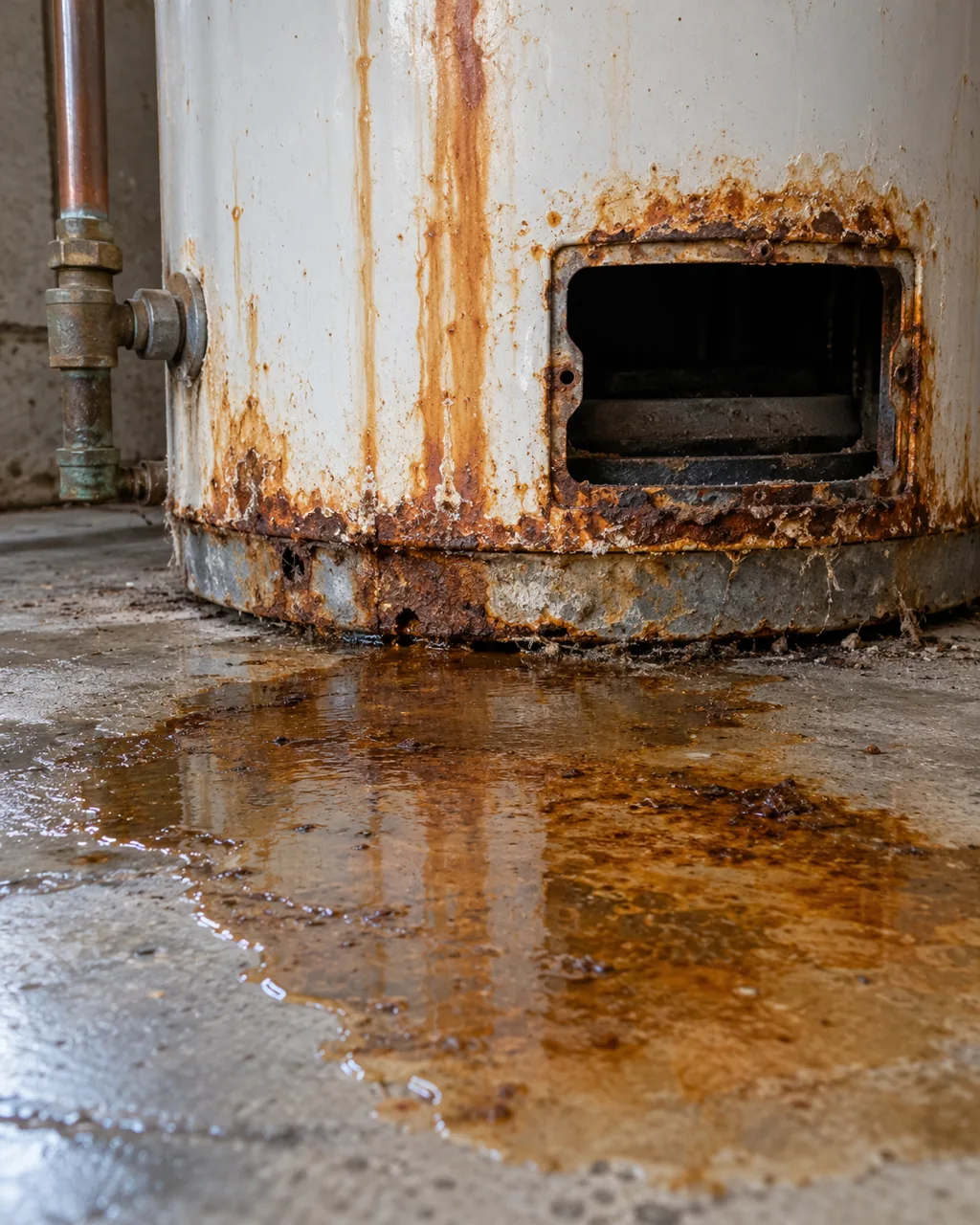
Rust streaks and a rust-stained puddle at the base of a corroded water heater tank on a garage floor
Rust weeping from the bottom of the tank shell means the inner tank has failed, and a failed tank cannot be patched.

Hard Water and Sediment

Builds up on the floor of the tank

Hard water leaves minerals that settle as sediment at the bottom of the tank, and that layer speeds up corrosion at the base. In San Antonio, TX, the water utility SAWS lists typical hardness at 15 to 20 grains per gallon, while Austin Water reports an average near 5.4 in Austin, TX.

  • 15 to 20 grains per gallon
  • Speeds up corrosion at the base
Call about this
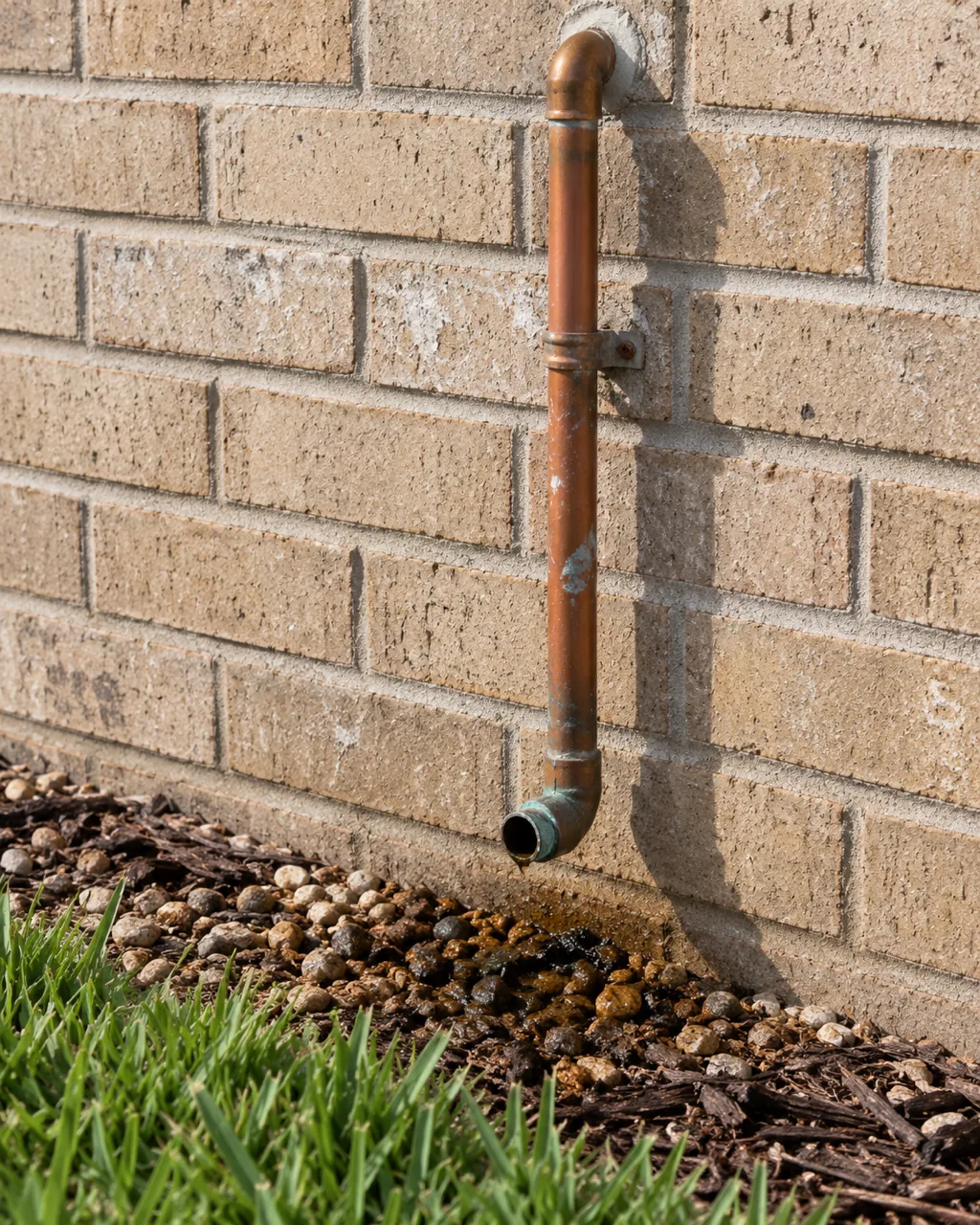
Copper relief valve discharge pipe running down a brick wall and turned down near the ground, as Texas code allows
Texas plumbing code sends the relief valve discharge to an approved place, often outside and turned down near grade.

High Pressure and Thermal Expansion

Shows up at the relief valve discharge pipe

Water expands as it heats. On a closed system with no working expansion tank, that extra volume pushes the pressure up until the temperature and pressure (T&P) relief valve opens and drips. High incoming pressure from the street does the same.

  • Water expands as it heats
  • No working expansion tank
Call about this
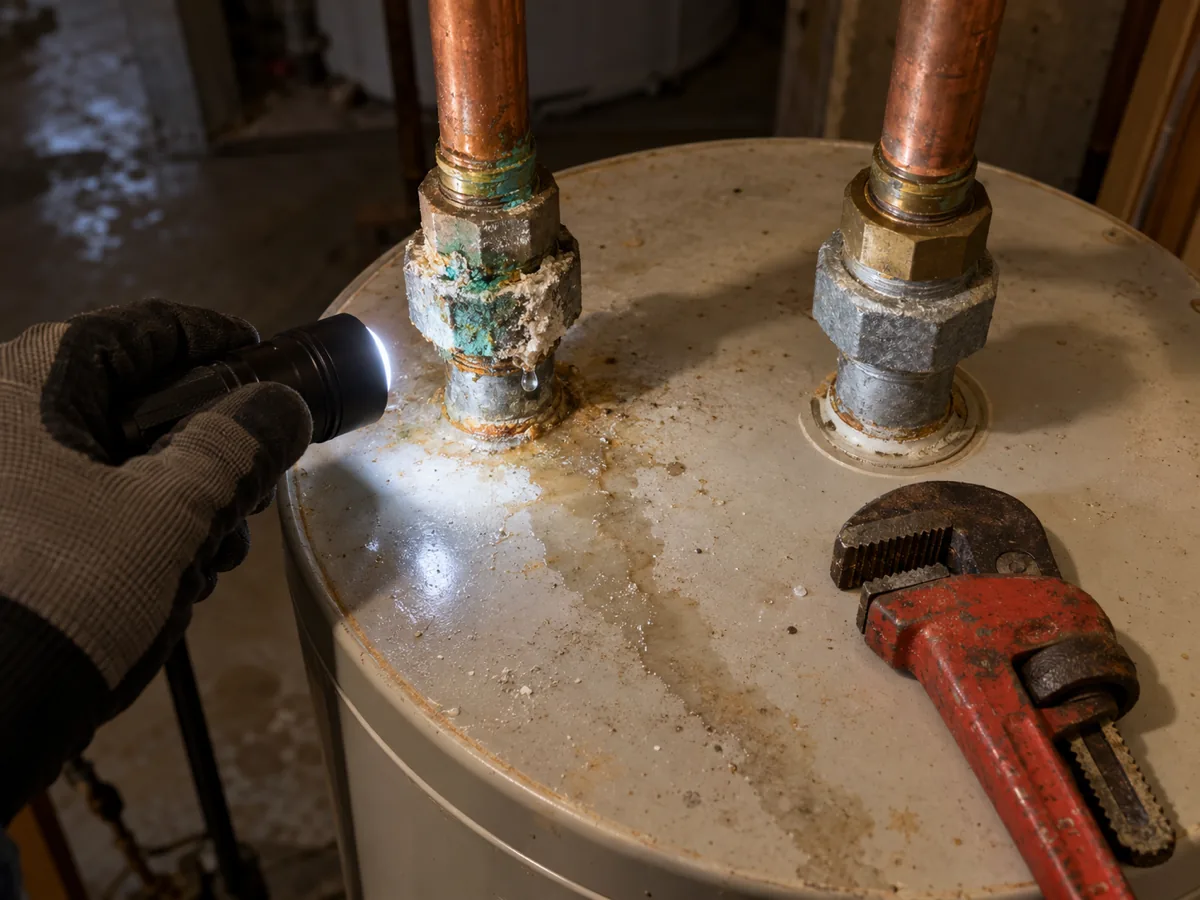
Corroded nipples and dielectric unions on top of a water heater with green and white crust and a wet drip trail
Leaks on top of the tank usually come from the inlet and outlet nipples or dielectric unions and are repairable.

Worn Fittings on Top of the Tank

The joints above the tank, at the cold inlet and hot outlet

The short nipples and dielectric unions on top (fittings that keep the steel tank and copper pipe apart) corrode over the years. A weeping joint grows white or green crust, and its water runs down the jacket so it looks like a tank leak from below.

  • White or green crust
  • Looks like a tank leak from below
Call about this
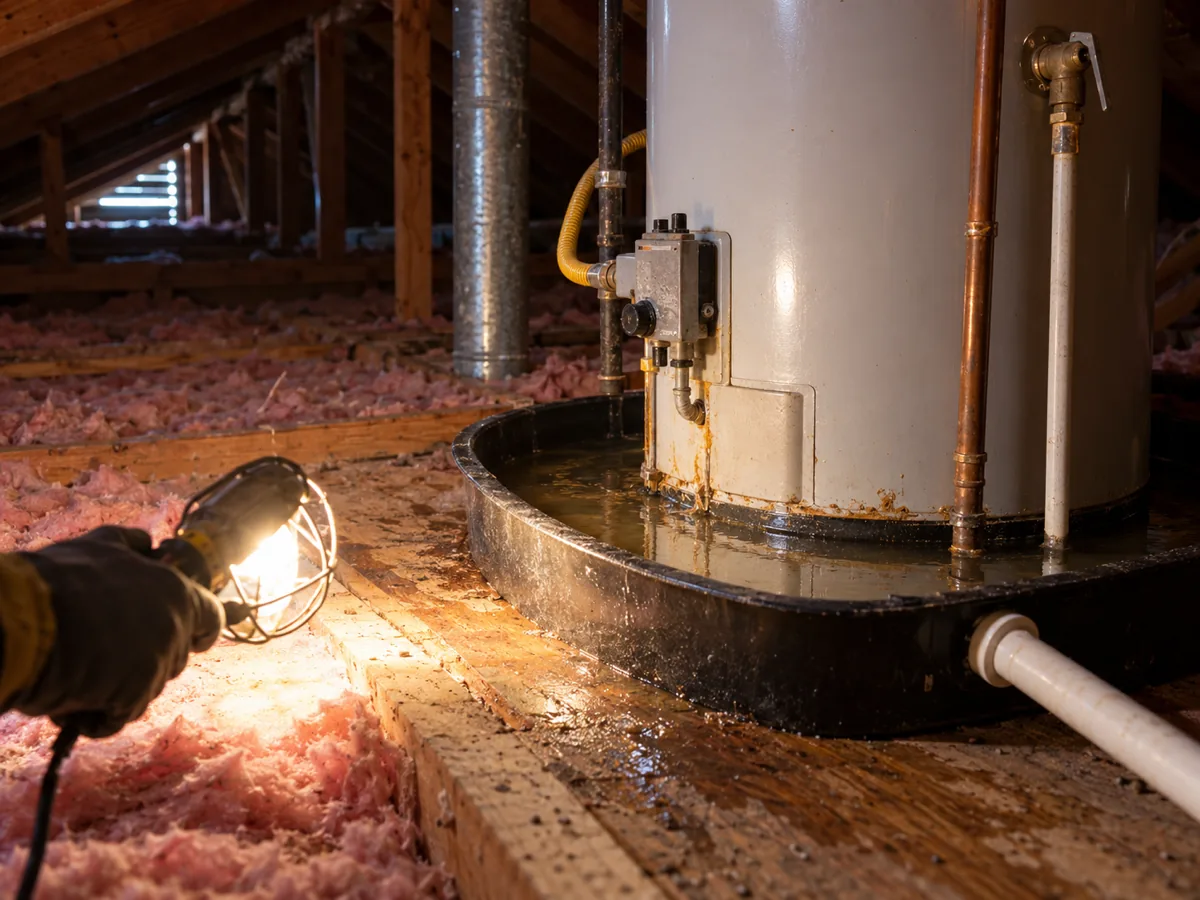
Attic water heater on a plywood platform with water in its drain pan, lit by a work light in a Texas attic
An attic heater sits in a pan with a drain line because a leak there runs into the ceiling below.

Freezing Nights in Attics and Garages

Exposed lines in attics, garages and outdoor closets

NOAA's 1991-2020 climate normals count 10.1 nights a year at or below freezing in Houston, TX and 42.0 in El Paso, TX. Lines feeding a heater in an unheated attic or garage can split in a hard freeze, and they often don't leak until they thaw.

  • Can split in a hard freeze
  • Often don't leak until they thaw
Call about this
Rust bleeding through the seam of an old water heater tank at its base as the steel shell rusts through
Once the anode rod is used up, the glass-lined steel tank rusts from the inside until the shell itself leaks.

An Old Tank Rusting Through

The tank shell, usually at the base or a seam
A storage tank is glass-lined steel, and the anode rod inside corrodes first to protect it. Once the rod is used up, the steel itself starts to rust. A tank leaking from its shell can't be patched, so the heater has to be replaced.

  • Glass-lined steel
  • Can't be patched
Call about this

Our Water Heater Leak Repair Services

We sort leak calls by where the water shows up, because that points to the part that failed. Each one ends with the part fixed or, when the tank itself is leaking, a new heater.

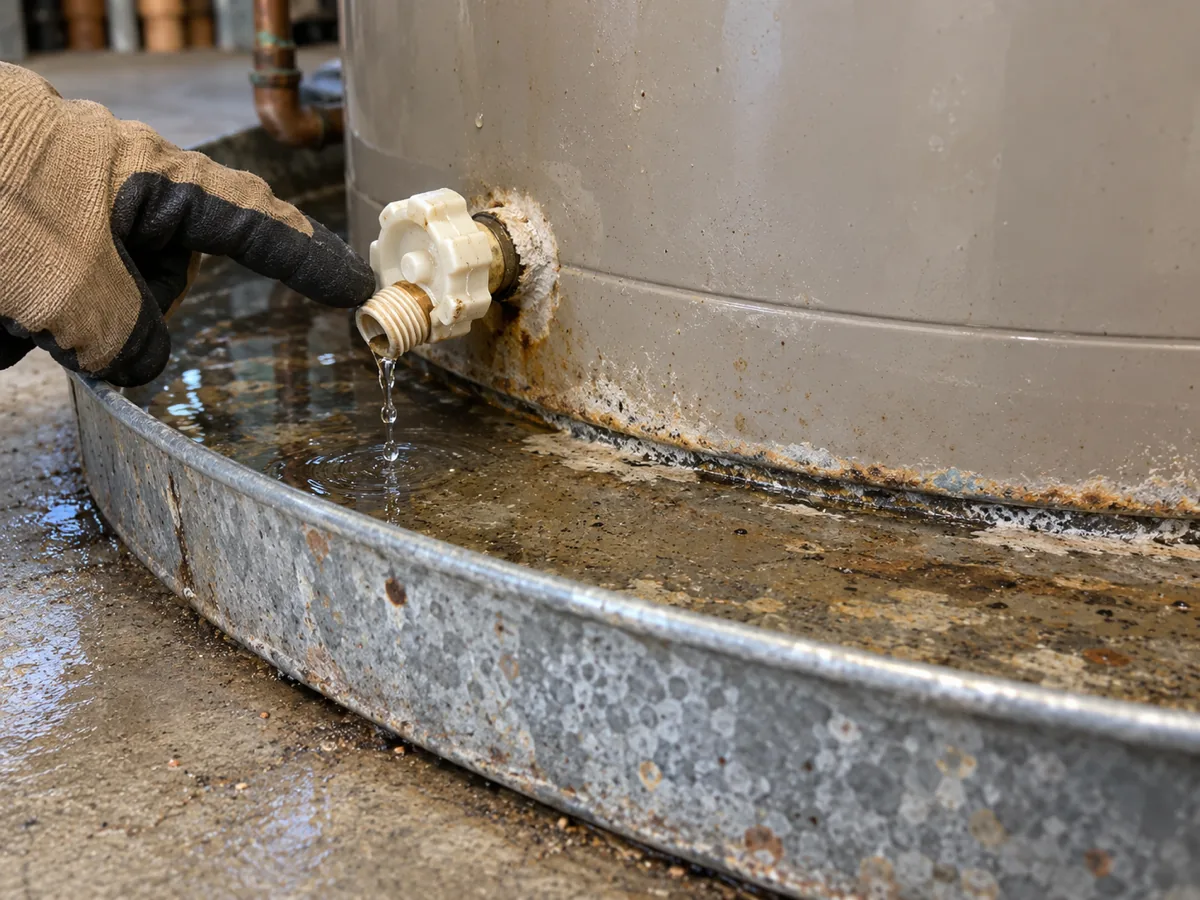
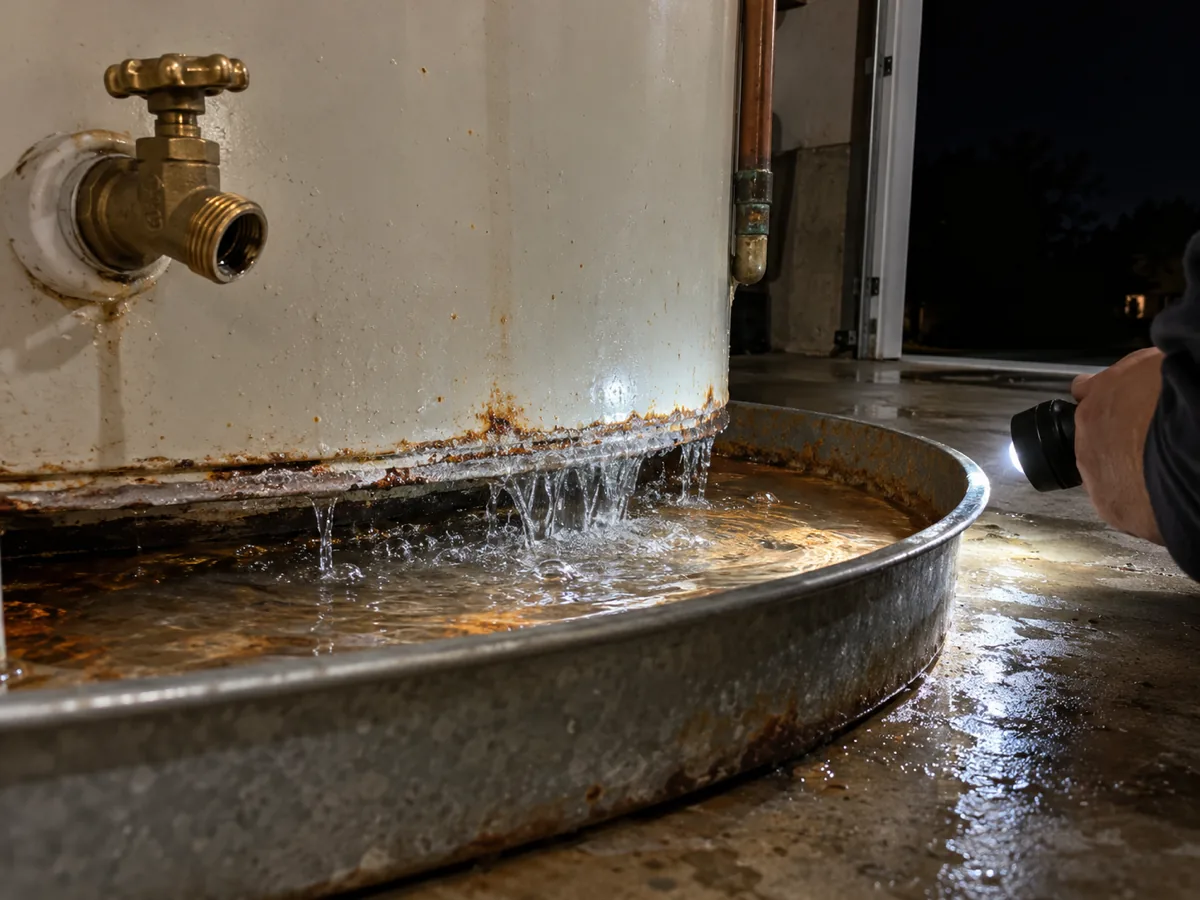
Drain valve at the bottom of a water heater dripping into a metal drain pan holding standing water
A drain valve that will not seal leaks at the base of the tank, into the pan, and is a part swap, not a new heater.

Water Heater Leaking From the Bottom

Water at the base comes from the drain valve, from condensation or from the tank. We dry the area and watch where it returns. A dripping drain valve gets replaced, while water seeping from under the jacket means the tank has failed.

  • A dripping drain valve gets replaced
  • The tank has failed
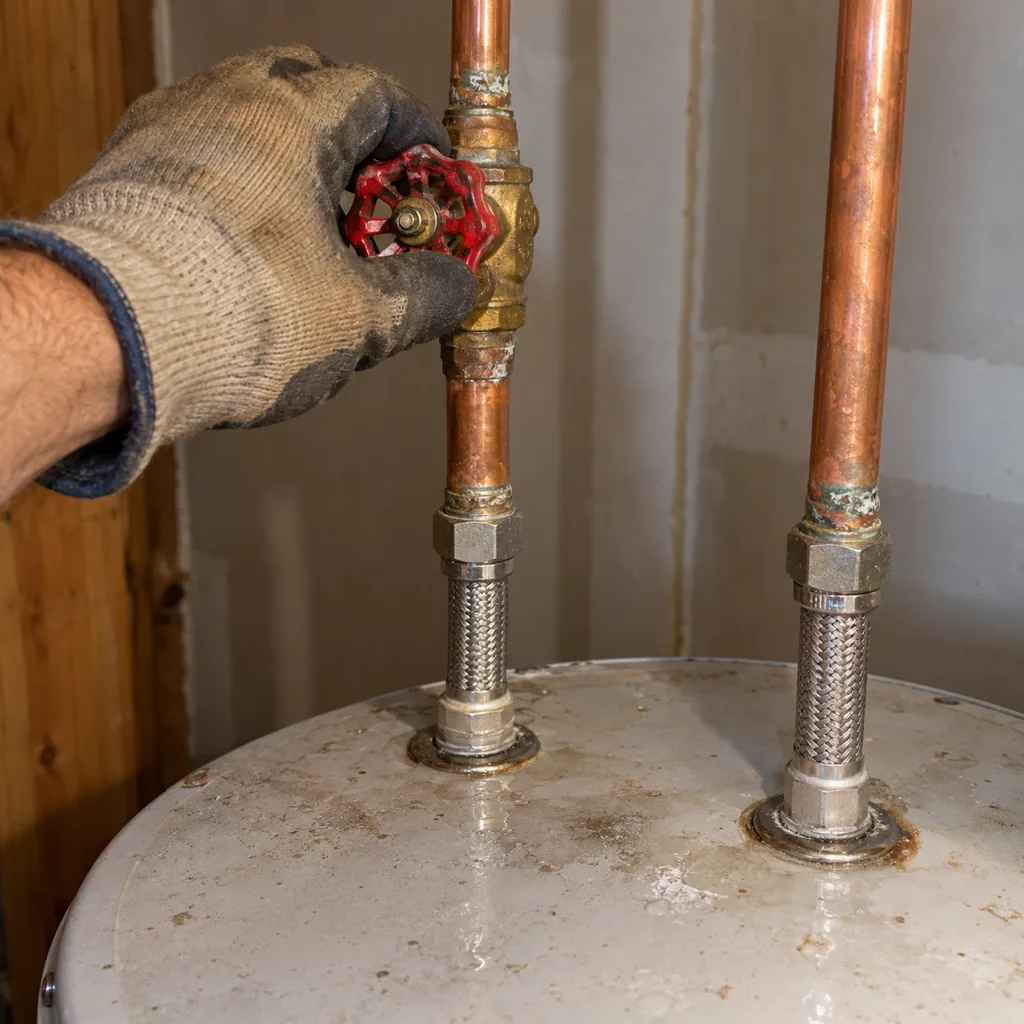
Gloved hand turning the red wheel of the cold-water shut-off valve on the copper pipe above a leaking water heater
The first move with a leaking heater is the cold-water shut-off on the supply line above the tank.

Water Heater Leaking From the Top

Leaks on top are usually fittings: a loose or corroded nipple, a dielectric union, the cold shut-off valve or the anode rod port. We tighten or replace the joint and make sure nothing is running down inside the jacket.

  • Usually fittings
  • We tighten or replace the joint
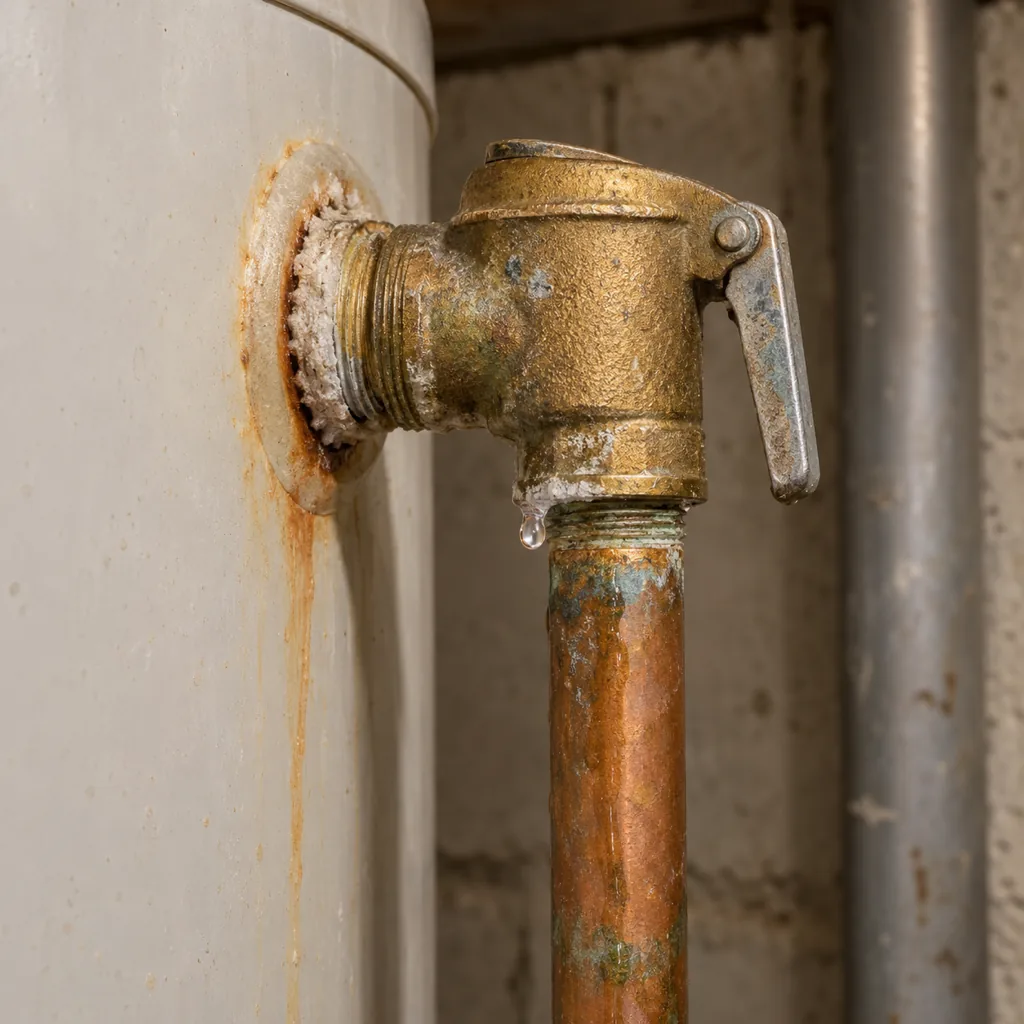
Water dripping from a T&P relief valve and its discharge pipe on the side of a water heater tank
A dripping temperature and pressure relief valve points to a worn valve, high pressure or heat, never a valve to plug.

Relief Valve Leaking or Dripping

A dripping relief valve is either reacting to high pressure or heat, or it has worn out. We test house water pressure and the expansion tank first, then replace the valve if it is the fault. A relief valve is never plugged or capped.

  • We test house water pressure
  • Never plugged or capped
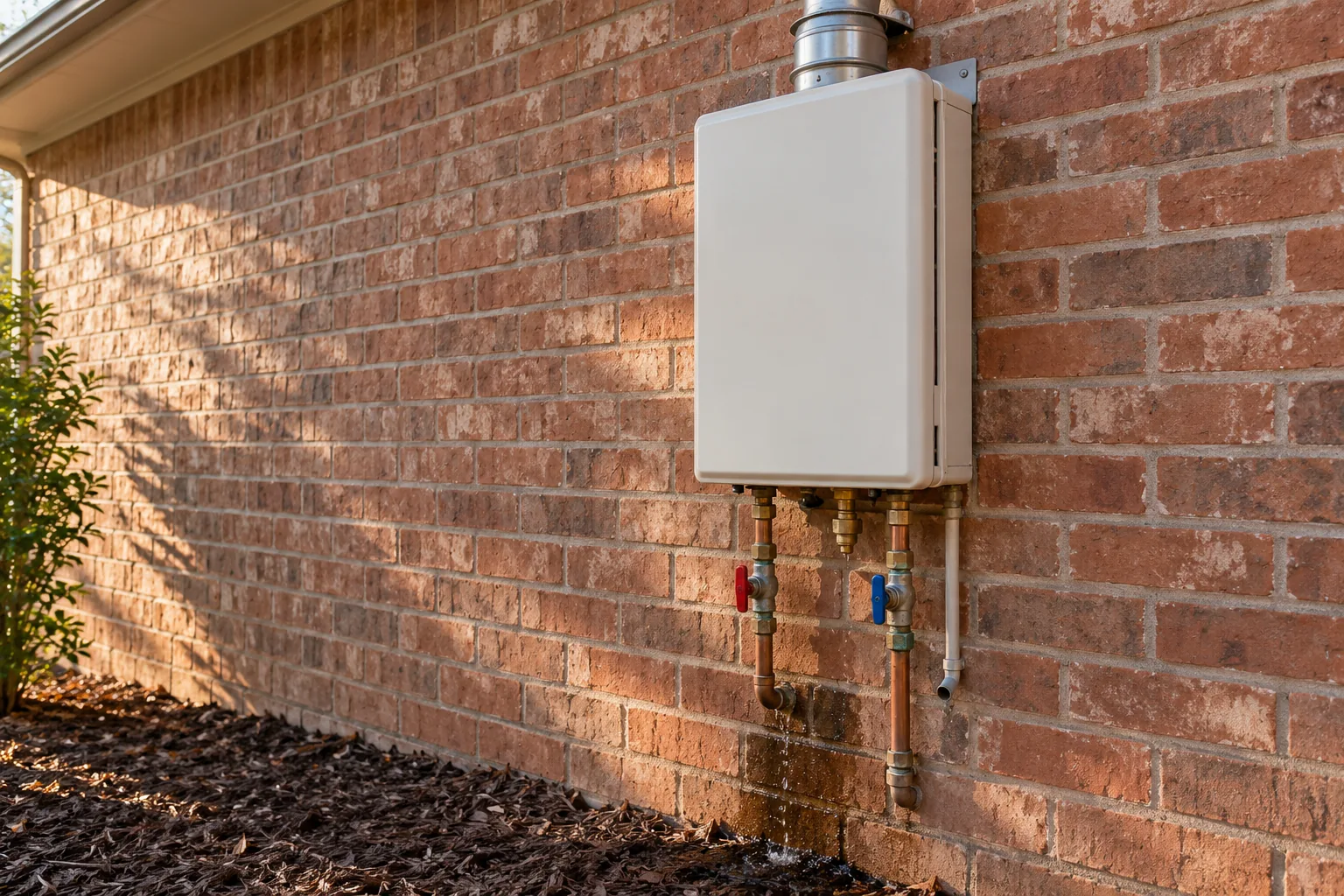
Tankless water heater on an exterior brick wall in Texas with a drip at its pipe connections
A tankless unit leaks at its connections, its relief valve or its heat exchanger, not from a tank.

Tankless Water Heater Leaks

A tankless unit has no tank to rust through, so its leaks start at the water connections, its relief valve or the heat exchanger inside the cabinet. We trace the drip on the wall unit and repair the connection or the failed part.

  • No tank to rust through
  • Repair the connection or the failed part
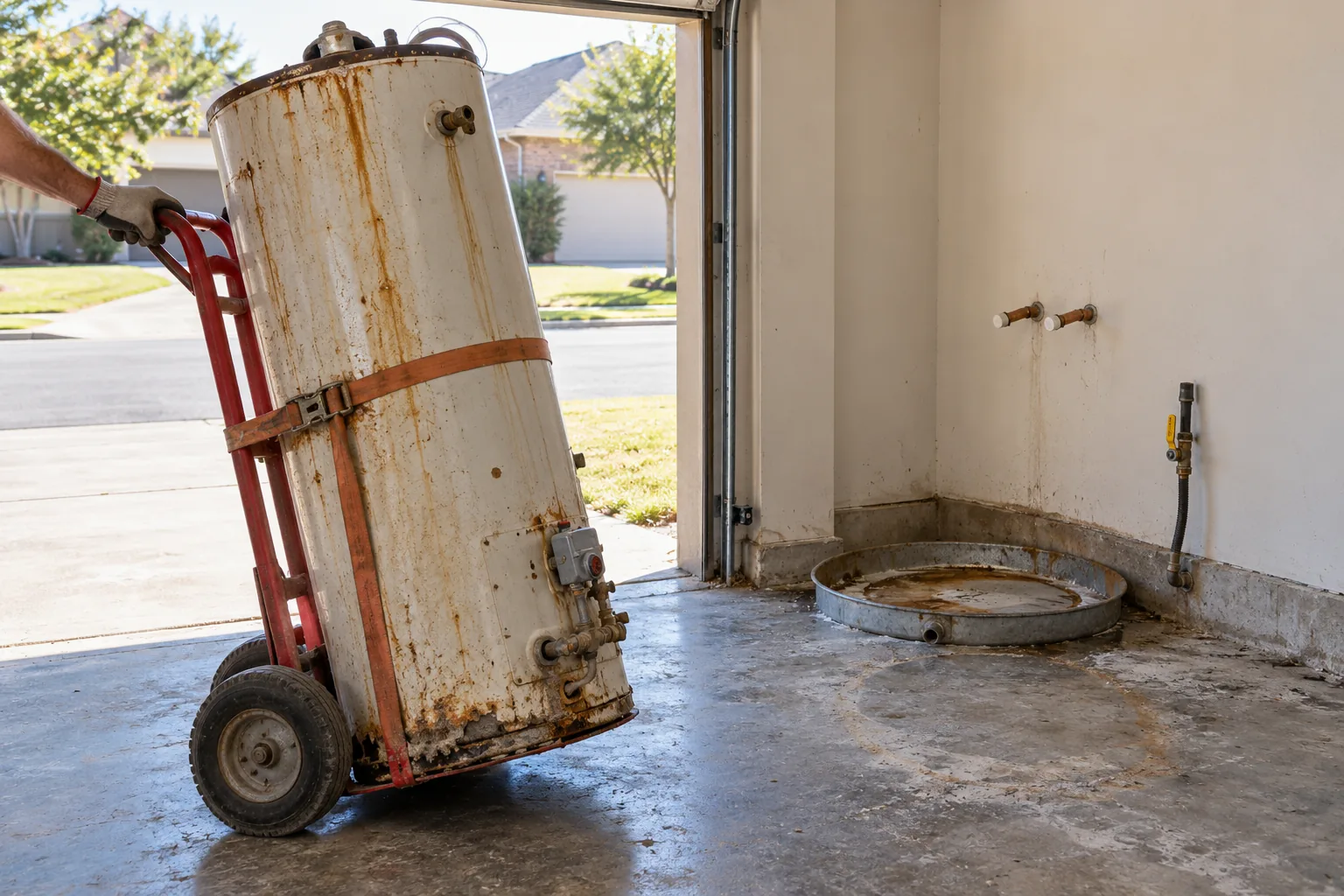
Old rusted water heater strapped to a hand truck in a garage after its tank failed and could not be repaired
A valve or fitting leak is a repair; a tank that leaks through its shell is a replacement.

Replacing a Failed Tank

When the tank itself is leaking, the fix is a new heater. We disconnect and drain the failed unit and install a replacement that fits how much hot water the home uses, gas or electric, tank or tankless.

  • The fix is a new heater
  • Gas or electric, tank or tankless

Why Choose Us for Water Heater Leak Repair

Our whole business is leaking water heaters, so every visit starts with one question: where is the water coming from.

  • We Work Only on Leaking Water Heaters

    Every call we take is about a water heater: the tank, its valves, its fittings and the lines that feed it. That is the only work we do.

  • We Show You What Failed

    We point out the failed part and explain what caused it, so you know whether the same leak is likely to come back on the next tank.

  • We Check the Pressure Side

    When a relief valve drips, we read the house water pressure with a gauge and check the expansion tank, and only then swap the valve. A new valve on a system with too much pressure starts dripping again.

  • We Say What a Photo Can't Show

    A photo can show where the water is, but rarely what failed. On the call we tell you what we can judge from your description and what has to wait until we see the heater.

Signs You Need Water Heater Leak Repair

Most leaks give a warning before the floor gets wet. Each of these signs is something you can check yourself in a minute.

Water in the Drain Pan

Look into the pan under the heater. Standing water or a rust ring means something above it has been dripping, even when the floor around it is dry.

A Wet Relief Valve Pipe

Touch the end of the pipe that runs down from the relief valve. A damp tip or a white mineral crust shows the valve has been opening.

Rusty Hot Water

Run hot water only into a white cup, then cold water into another. Rust-colored hot water next to clear cold water points to corrosion inside the tank.

Crust on the Top Fittings

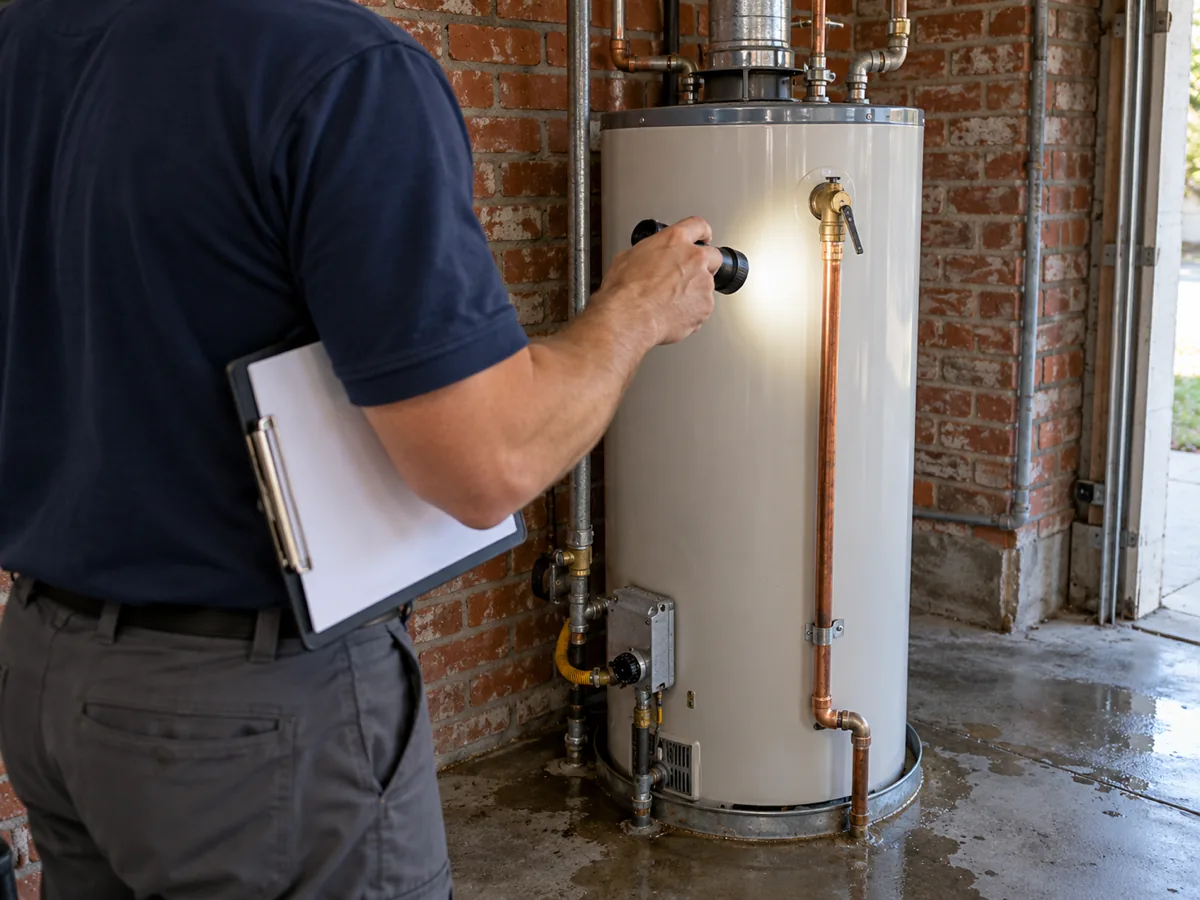
Shine a flashlight on top of the heater. White or green crust on the pipe joints means a fitting has been weeping for a while.

Sizzling at the Burner

On a gas heater, listen at the burner door while it runs. A hiss or sizzle can be water dripping onto the flame from a leak above it.

A Damp Floor or Wall Nearby

Press the carpet, baseboard or drywall next to a closet or garage heater. Soft or damp material means water has been reaching it for some time.

Where Your Water Heater Is Leaking From

Where the water shows up points to the part that failed and whether it can be repaired. Our guide walks through every leak source explained in more depth.

Where you see waterUsual sourceRepairable?Typical national cost
Dripping from the pipe on the side of the tankT&P relief valve, or pressure that is too highYes, a new valve or a pressure fix$100-$250 for a new relief valve, parts and labor
Around the spigot near the baseDrain valveYes, the valve is replaced$100-$200
On top of the heater or running down the jacketNipples, dielectric unions or the shut-off valveUsually, the joint is repairedWithin the $50-$600 typical leak fix
Seeping from under the jacket at the baseThe tank shell has corroded throughNo, the heater is replaced$600-$2,500 for a tank-style heater, installed
At the connections of a wall-hung unitTankless water fittings or relief valveUsuallyPriced after we see the unit

Water Heater Repair vs. Emergency Water Heater Replacement

The part that failed decides it: valves and fittings get repaired, and a leaking tank gets replaced. We also cover deciding between repair and replacement step by step.

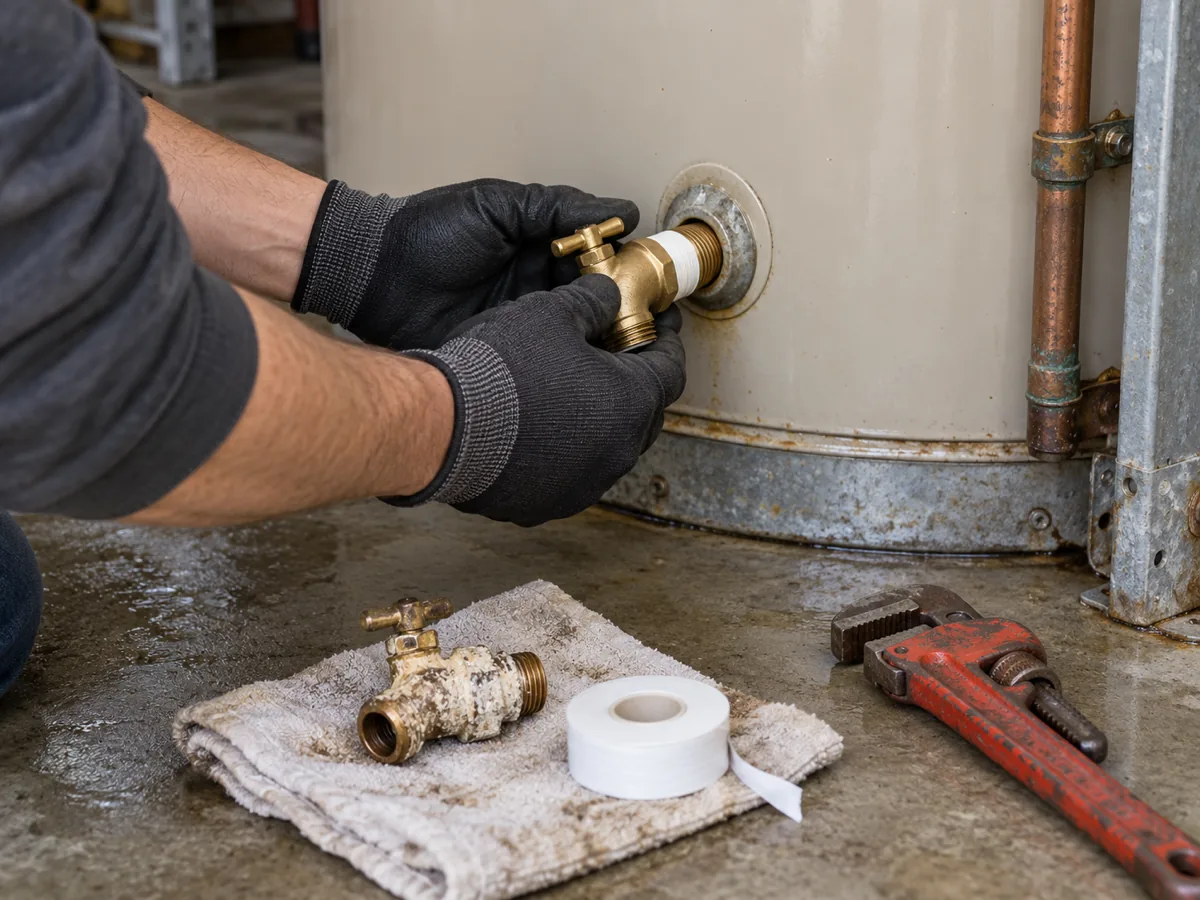
Gloved hands fitting a new brass drain valve on a water heater, a valve or fitting repair that keeps the tank in place

Repair: A Valve or Fitting

A leaking relief valve, drain valve, nipple or union is a part swap. The tank stays in place and keeps whatever life it has left.

Water seeping from under the jacket at the bottom of a leaking water heater tank while the drain valve stays dry

Replace: The Tank Is Leaking

Rust weeping from the shell or water coming from under the jacket means the steel has corroded through. No patch holds on a tank under pressure, so the heater comes out.

Aging water heater with a new relief valve and connectors yet a fresh leak at the base, repairs that keep coming

Replace: The Repairs Keep Coming

Rusty hot water, a loud sediment rumble and a second leak within a short time all point to a tank near the end of its life. A repair on that tank buys little time.

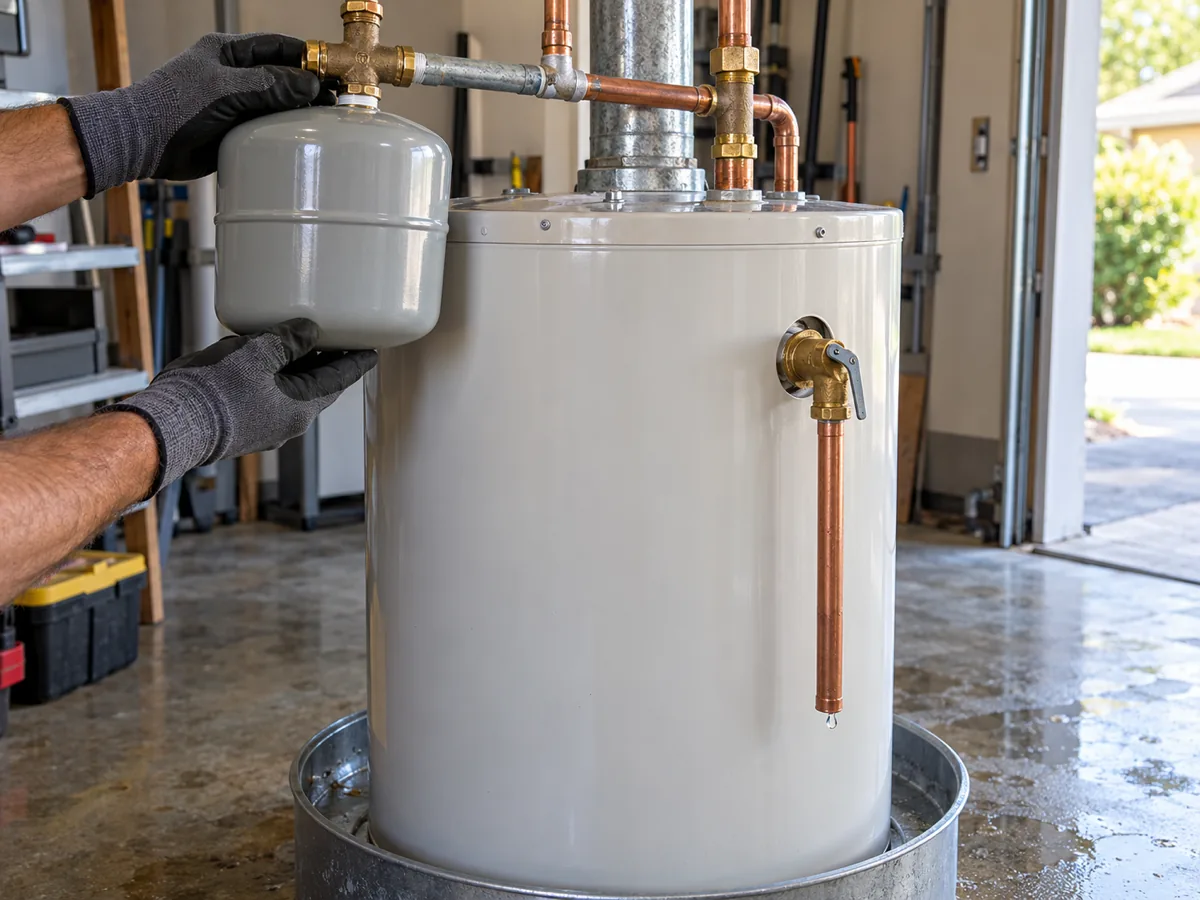
New water heater with a dripping relief valve pipe as an expansion tank is added on the cold supply to correct the pressure

Repair First: A New Heater That Drips

A relief valve that starts dripping soon after a new heater goes in usually points to high pressure or a missing expansion tank. We correct the pressure, and the new heater stays.

Gas, Electric and Tankless Water Heaters Compared

We work on all three types. The type changes where leaks start and what you shut off first, and the installed costs are national survey ranges for a replacement.

TypeTypical installed cost (national)Where leaks usually startWhat to shut off first
Gas tank$700-$2,700Relief valve, drain valve and the tank baseThe cold supply and the gas control on the heater
Electric tank$500-$3,500Relief valve, drain valve and the element gasketsThe cold supply and the heater's breaker
TanklessPriced after we see the installWater connections and the relief valveThe cold supply, then the gas or the breaker

Water Heater Leak Repair Cost in Texas

Most leak repairs cost a fraction of a new heater. These are national survey ranges plus two Texas city permit fees, and our guide to what a leak repair costs goes further.

ItemTypical rangeWhat moves it
Fixing a water heater leak$50-$600Where the leak is and how bad it has become
T&P relief valve replacement$100-$250, parts and laborAccess to the valve and its discharge pipe
Drain valve replacement$100-$200Sediment in the tank and the valve type
Plumber labor$50-$150 per hour; a call-out fee near $50, sometimes waived if you hireHours on site
Replacing a failed tank heater, installed$600-$2,500 tank-style; $900-$3,000 across all typesFuel type, size, venting and where the heater sits
Old unit removal, when billed separately$75-$500 including dumping feesAttic or closet access
City permit for a replacement$40 in McKinney, TX; $20 for the first heater in Arlington, TX and $7.50 for each extraEach city sets its own fee

Permit and Licensing Rules for Water Heater Work

Texas law treats water heater work as plumbing, and many cities want a permit when a heater is replaced. These rules are worth knowing before anyone touches the tank.

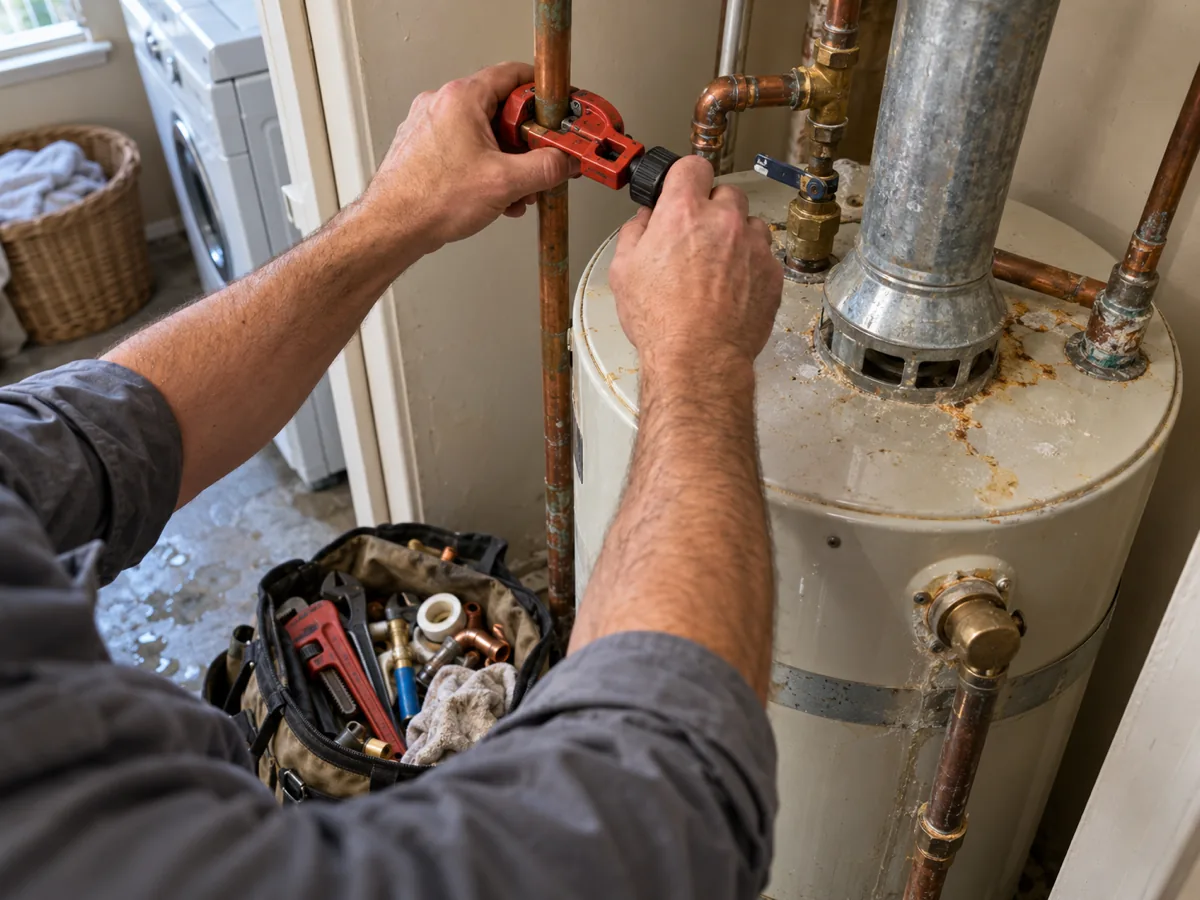
Plumber's hands cutting a copper supply line at a water heater, plumbing work kept under the Texas license law

Water Heater Work Is Plumbing Work

Texas Occupations Code section 1301.053 exempts appliance dealers from plumbing licensing for installation and service work, with one exception: water heaters. Work on a water heater stays under the state plumbing license law.

Homeowner holding a phone to check a plumber's license number on the state board search before a water heater repair

How to Check a Plumber's License

The Texas State Board of Plumbing Examiners says Master Plumber license numbers begin with M, and its license search shows whether a license is valid with insurance on file. We explain checking a Texas plumber's license in our guide.

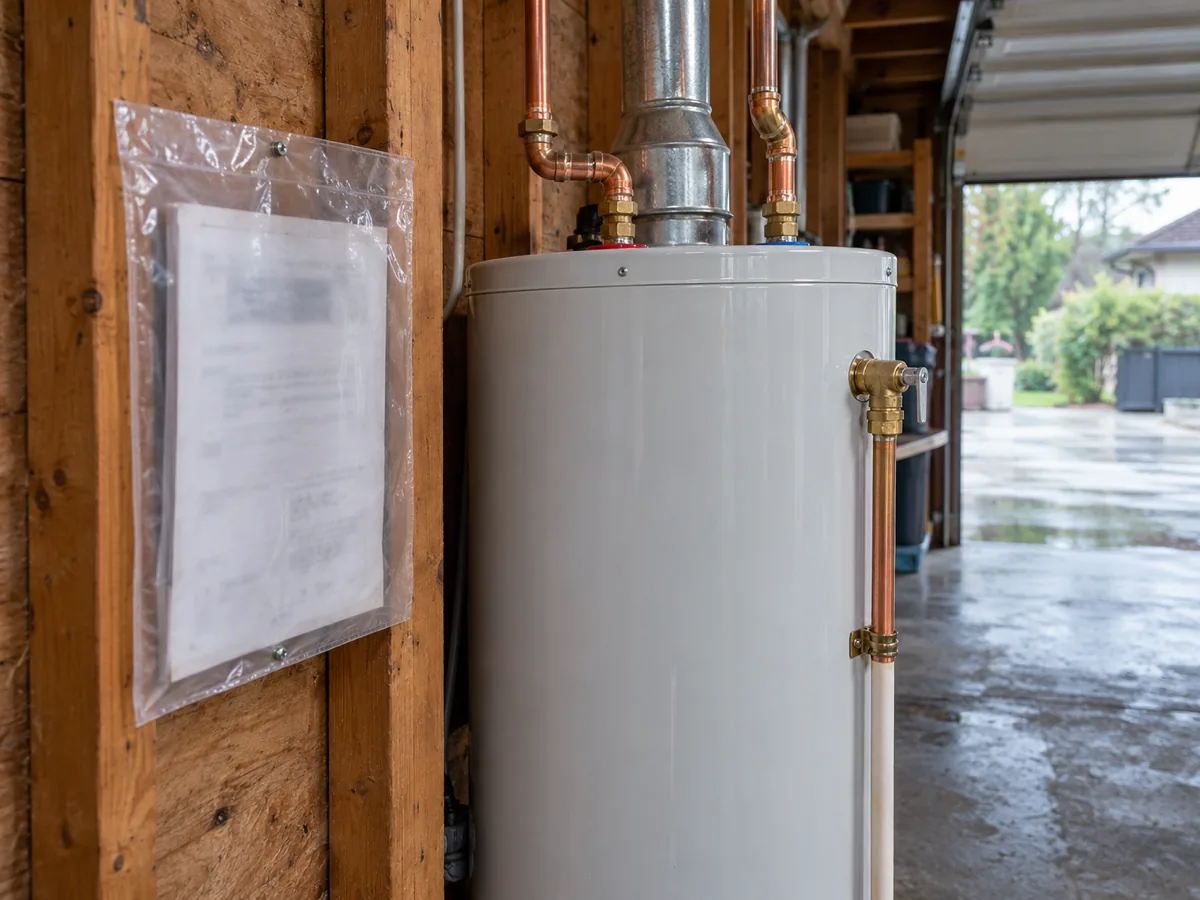
Plumbing permit sheet in a sleeve on the garage wall beside a replaced water heater, the permit the city sets

Your City Sets the Permit

The board tells homeowners to ask the city plumbing inspection office whether a job needs a permit. Fort Worth, TX requires a plumbing permit to change or repair a water heater, and McKinney, TX and Arlington, TX publish their fees.

Inspection of a replacement water heater's relief line after a master plumber pulled the city permit

Permit Routes in the Largest Cities

In Houston, TX, a replacement needs a permit, which only a master plumber on the city's registration list can pull, followed by an inspection. San Antonio, TX lets a licensed plumbing contractor replace an existing heater first and certify it under a Limited Service and Repair permit.

Our Service Areas in Texas

We take water heater leak calls from homes and rentals anywhere in Texas. These ten cities have their own page.

Cities we cover across Texas

  • Cream limestone ranch home under a live oak in San Antonio, TX, typical of the city's 1960s housing

    San Antonio, TX

    Bexar County · South-Central Texas

    Half the homes in San Antonio, TX were built in 1985 or earlier, according to the Census Bureau, so original shut-off valves and fittings at the heater are often due for a look. See our San Antonio water heater leak repair page.

  • Single-storey brick ranch home on a flat lot in Houston, TX, a house type that often has an attic water heater

    Houston, TX

    Harris County · Gulf Coast plain

    The Houston Permitting Center needs no plan review for a single-family water heater permit, and the permit stays valid for 180 days. See our Houston water heater leak repair page.

  • Limestone Hill Country style home with a metal roof on a sloping lot in Austin, TX

    Austin, TX

    Travis County · Central Texas

    Austin, TX amends the Uniform Plumbing Code and declined Appendix L, which would require treated water to heaters where hardness reaches 10 grains per gallon. See our Austin water heater leak repair page.

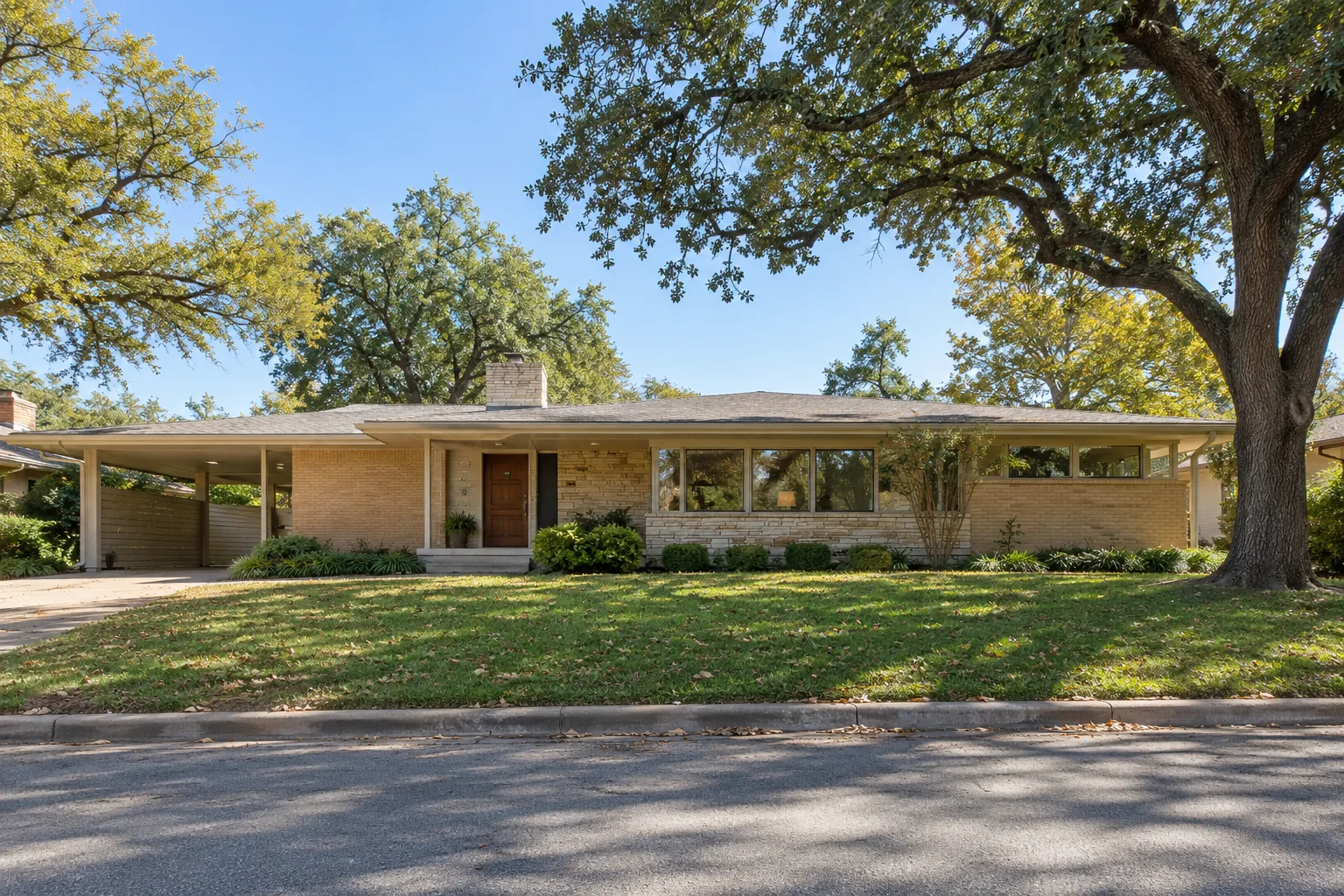
  • Mid-century ranch home with a low-pitched roof under mature trees in Dallas, TX

    Dallas, TX

    Dallas County · DFW east

    Half the homes in Dallas, TX were built in 1981 or earlier, according to the Census Bureau, the oldest median of the ten cities here. See our Dallas water heater leak repair page.

  • Stucco home with a rock yard below the Franklin Mountains in El Paso, TX

    El Paso, TX

    El Paso County · Far West Texas desert

    El Paso Water describes the water in El Paso, TX as moderately hard to hard, so mineral buildup on the tank floor and the drain valve is common. See our El Paso water heater leak repair page.

  • Two-storey 1990s brick home with a side-entry garage in Plano, TX

    Plano, TX

    Collin County · DFW north

    The North Texas Municipal Water District, which supplies Plano, TX, calls its treated water moderately hard because of minerals in Lavon Lake. See our Plano water heater leak repair page.

  • Newer two-storey brick and stone home in a master-planned McKinney, TX neighborhood

    McKinney, TX

    Collin County · DFW north

    The NOAA station at the McKinney, TX airport averages 47.8 nights a year at or below freezing, so heater lines in attics and garages need insulation. See our McKinney water heater leak repair page.

  • Brick ranch home on a wooded lot under tall pines in Conroe, TX

    Conroe, TX

    Montgomery County · North of Houston

    Conroe, TX requires contractors to hold a state license and register with the city before they can submit a permit. See our Conroe water heater leak repair page.

  • Corpus Christi, TX
  • Lubbock, TX
  • Laredo, TX
  • Irving, TX
  • Garland, TX
  • Frisco, TX
  • Grand Prairie, TX
  • Amarillo, TX
  • Brownsville, TX
  • Killeen, TX
  • Pasadena, TX
  • Mesquite, TX
  • Denton, TX
  • Waco, TX
  • Round Rock, TX
  • New Braunfels, TX
  • San Marcos, TX
  • Katy, TX
  • Sugar Land, TX
  • The Woodlands, TX

Our Water Heater Leak Repair Process

A leak call follows the same six steps from the first ring to a dry heater. Our about page covers how our leak calls work in more detail.

  1. 1

    You call us

    The person answering asks where the water is, whether the heater is gas or electric, and talks you through closing the cold supply. Smell gas? We tell you to get out of the house and call your gas utility first.

  2. 2

    We find the source

    We dry the jacket and fittings, then follow the water from the top of the heater down to the drain valve and the base. A drip from above can pool like a tank failure, so we check every joint before judging the tank.

  3. 3

    We check pressure and expansion

    A gauge goes on a hose bib to read house pressure, and we test the expansion tank if the system has one. A relief valve on an over-pressured system drips again, whatever else gets replaced.

  4. 4

    We explain the fix

    We show you the failed part, say whether it can be repaired or the tank has to go, and go over the options with you before any work starts.

  5. 5

    We repair or replace

    For a valve or fitting, we drain the tank down as needed, swap the part and seal the joint. For a failed tank, we install a new heater to the local code, and a replacement usually needs a city permit and inspection.

  6. 6

    We test it hot

    We refill the tank, bleed the air out at the hot taps, let the heater come up to temperature and check every joint and the relief valve again for drips.

What to Do Before Our Crew Arrives

These steps are safe for most homeowners and stop most of the water. Our guide has the full first-steps checklist for every type of heater.

  1. Close the cold supply

    Turn the valve on the cold pipe above the heater clockwise until it stops. That keeps new water from entering the tank.

  2. Turn off the heat

    On a gas heater, set the gas control to off. On an electric heater, switch off its breaker before more water spreads.

  3. Leave at any smell of gas

    Get everyone outside, don't touch light switches, and call your gas utility from outside. We come out once the gas side is safe.

  4. Move things off the floor

    Lift boxes, rugs and anything stored near the heater, and put a bucket or towels where the water is running.

  5. Take a few photos

    Photograph the water, the label on the heater and any drip you can see. They help on the call and for your own records.

  6. Leave the relief valve alone

    Never cap or plug a dripping relief valve. It is the part that keeps the tank from building up dangerous pressure.

Water Heater Leak Triage

How much water there is and where it comes from tells you whether to call now or wait for business hours.

Water Running From the Tank Base

Steady water from under the jacket means the tank has failed. Close the cold supply and call now.

Relief Valve Pouring Hot Water

A relief valve discharging a steady stream points to overheating or very high pressure. Turn off the heat and call now.

Water Near Outlets or Wiring

Water spreading toward outlets, the breaker panel or an electric heater's wiring is a shock risk. Switch off the breaker and call now.

Slow Drips That Can Wait

A pan catching slow drips, a damp relief pipe tip or crust on a fitting can wait for a daytime visit. Check the pan every few hours.

Call for 24/7 Water Heater Leak Repair

Our calls are answered 24/7, including nights, weekends and holidays. Close the cold supply, then call us about the leak.

Call (512) 325-0362
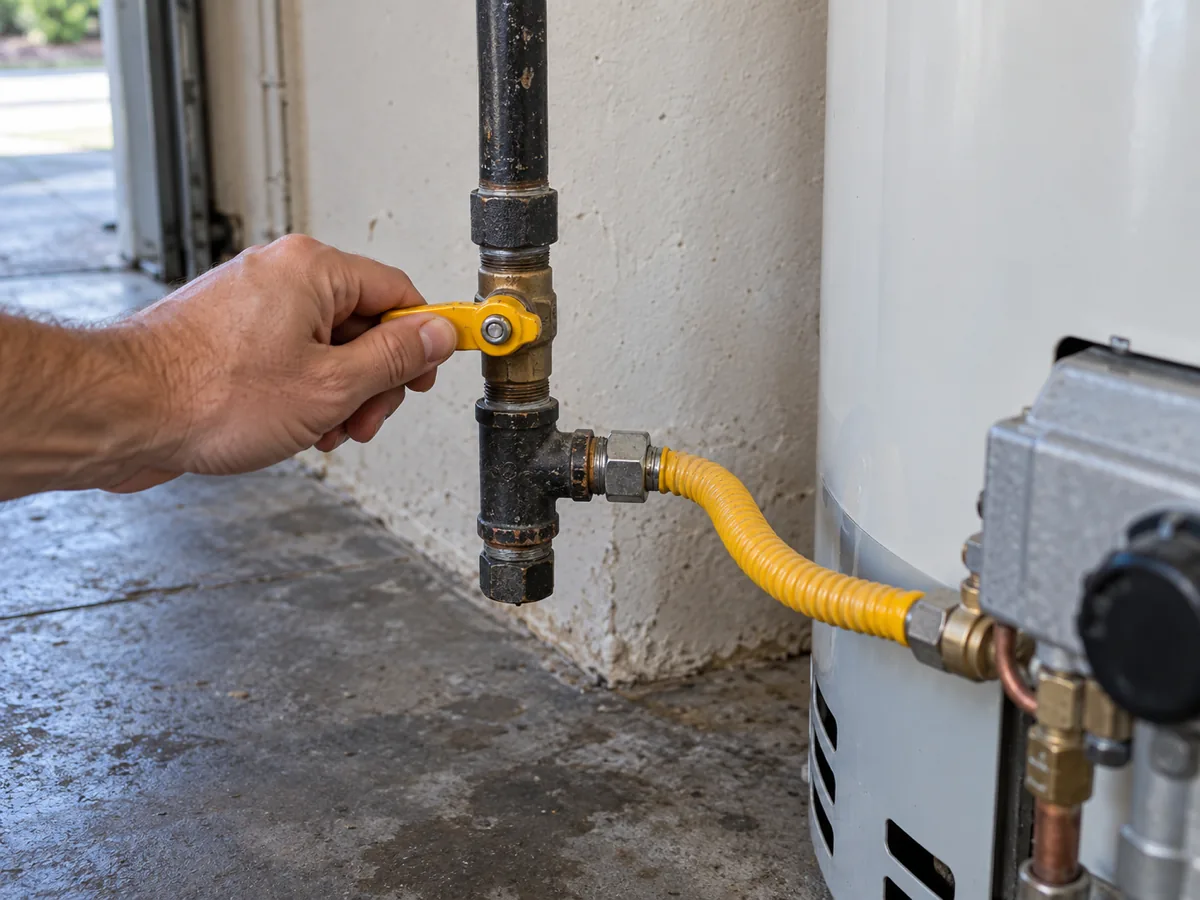
Hand turning the gas supply valve handle crosswise to shut off the gas to a water heater in a garage

FAQs About Water Heater Leak Repair in Texas

These are the questions Texas owners and landlords bring us when a water heater leaks, from who can legally do the work to the landlord hot-water rule.

Your question isn't here?

(512) 325-0362Call now

Who do I call if my hot water heater is leaking water?

Call a water heater leak service like ours, and ask for the plumber's license number. Texas Occupations Code section 1301.053 keeps water heater installation and service under the state plumbing license law.

Does homeowners insurance pay for a water heater that leaks?

Usually the worn-out heater itself is not, because most homeowners policies treat a tank that fails with age as wear and tear. Water damage from a sudden leak is a separate question, so check your policy or ask your insurer.

Can I replace my own water heater in Texas?

Yes, in your own homestead. Texas Occupations Code section 1301.051 lets a property owner do plumbing in their homestead without a license. Cities still require permits: Houston, TX issues a homeowner's permit only for the homestead you live in.

Is there a federal tax credit for a new water heater in 2026?

No. The IRS says the section 25C Energy Efficient Home Improvement Credit is not allowed for property placed in service after December 31, 2025, so a heat pump water heater installed in 2026 earns no 25C credit.

Does a Texas landlord have to fix a water heater that leaks?

Yes, when the leak leaves the home without hot water. Texas Property Code section 92.052 requires a landlord to make a diligent effort to repair a hot water supply that cannot reach 120 degrees Fahrenheit, after tenant notice and with rent current.

Should a water heater relief valve drip?

No. A dripping relief valve is opening because pressure or temperature is too high, or because the valve is worn. An expansion tank and correct pressure usually solve the first cause, and we cover keeping the next tank dry.

Do tankless water heaters leak?

Yes, though they have no tank to rust through. Leaks show up at the water connections, the relief valve or the heat exchanger, and our guide to leaks on tankless units shows where to look.

Is every puddle under a water heater a leak?

No. A gas heater full of cold water can drip condensation onto the burner until the tank warms up. If the puddle comes back with the heater hot, check for the early signs of a leaking tank.

Call for Water Heater Leak Repair in Texas

Tell us where the water is coming from and whether the heater is gas or electric, and we will talk you through shutting it off. Our Texas water heater leak guides cover each leak source in more depth.

Call (512) 325-0362